
 Deutschland
 USA
 Brasil
 Español

How Fungal Postbiotics Help Get More Value from Feed
Every kilogram of feed contains value. The challenge is how much of that value is converted into animal output.
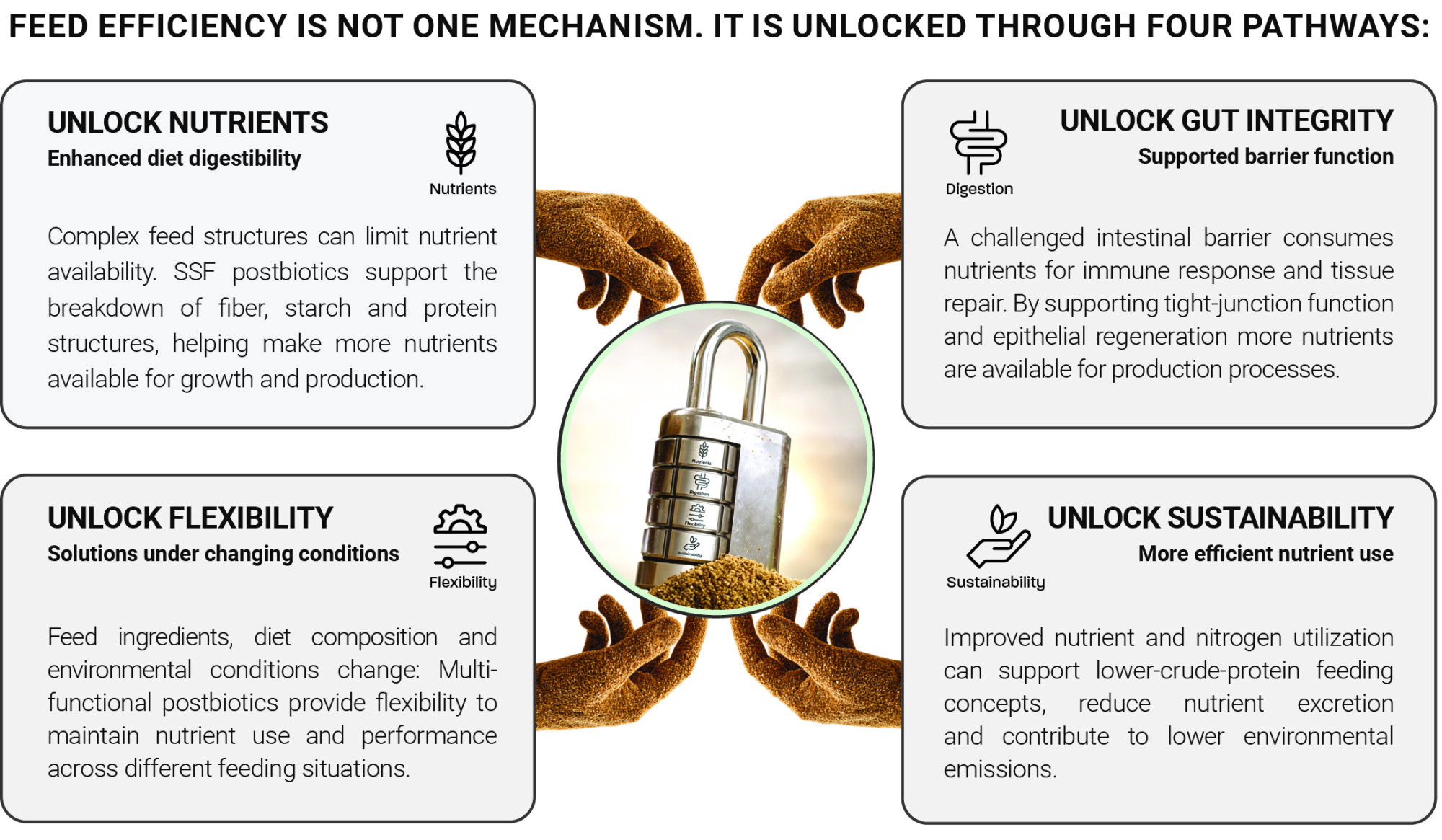
Feed efficiency depends on nutrient availability, gut functionality, animal resilience and the intelligent use of feed resources. Fungal postbiotics produced through solid-state fermentation (SSF) offer a multifunctional approach to help unlock this potential through four connected pathways.
Solid-State Fermentation: A Proven Technology for Smarter Nutrition
Solid-state fermentation cultivates selected fungi on moist solid substrates. The resulting dried postbiotic feed materials combine bioactive metabolites with enzymatic activity, creating multifunctional solutions for monogastric and ruminant diets.
Research into solid-state fermentation also demonstrates its potential to improve the nutritional characteristics of plant-based feed materials. Studies have reported reduced fiber fractions, increased protein availability and the production of relevant enzymes during fermentation.
One Fermentation Technology. Four Targeted Solutions.
Different diets create different nutritional limitations. The MAXFERM and MAXFIBER product lines apply the same fermentation expertise to target fiber, protein and starch utilization across monogastric and ruminant feeding.
MAXFERM helps open the non-starch polysaccharide matrix of plant-based feed materials.
By reducing the barrier effect of complex fiber structures, it supports nutrient digestibility, gut functionality and greater flexibility in diet formulation.
MAXFERM/PRO helps release protein from cytoplasm and cell-wall structures in protein-rich feed materials.
Improved protein availability supports efficient nutrient utilization and creates opportunities for lower dietary crude-protein levels and reduced nitrogen excretion.
MAXFIBER supports the degradation of crude fiber and structural carbohydrates such as cellulose and hemicellulose.
Greater dry-matter digestibility and improved energy utilization can support rumen fermentation, feed conversion, milk yield and persistence, particularly in forage-based feeding systems.
MAXFIBER/HSD is designed for diets rich in non-fiber carbohydrates such as starch and pectin.
It supports starch digestibility and nutrient utilization in concentrate-rich or fast-fermenting rations while contributing to stable ruminal fermentation
More Value from Every Kilogram of Feed
Feed efficiency is not based on one isolated mechanism. It is the result of several connected factors: enhanced diet digestibility, supported gut integrity, greater formulation flexibility, animal resilience, efficient nitrogen utilization and responsible use of feed resources. Solid-state fermentation and fungal postbiotics provide a technology platform for addressing these factors across different animal species and feeding situations.
Proven postbiotics. More value from every kilogram of feed.